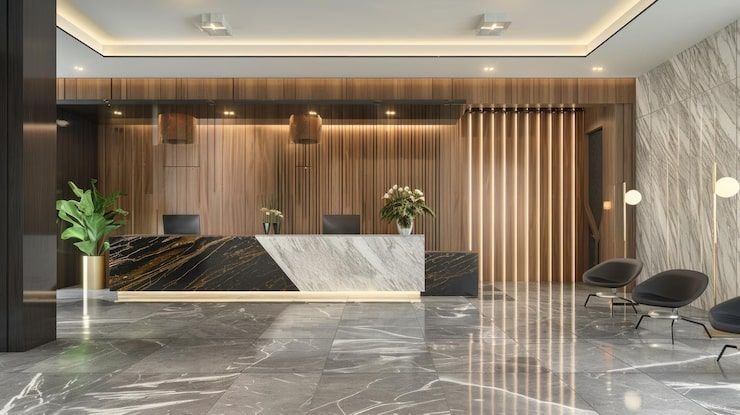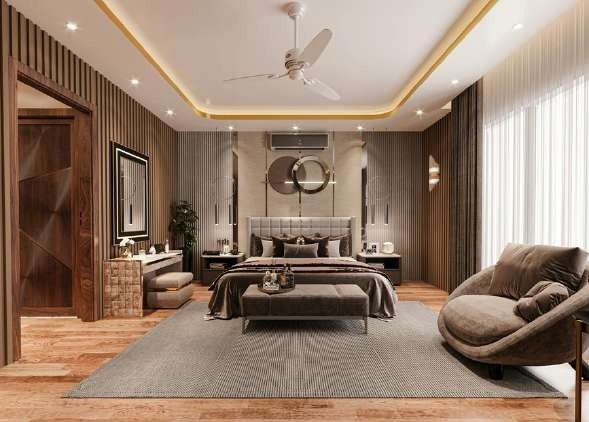
A well-planned false ceiling does three jobs at once: it hides wiring and AC ducting, it gives you control over lighting, and it adds a layer of design overhead. A badly planned one does the opposite — it makes the room feel low, heavy and cluttered with fixtures. The difference is almost always decided before the work starts.
Popular false ceiling styles
- Perimeter (cove) ceiling — a dropped border with concealed LED lighting around the edge. Clean, calm and the most popular choice for bedrooms and living rooms.
- Tray or island ceiling — a raised or dropped centre panel that defines a seating or dining zone.
- Accent panels — wooden slats or panels over one zone, such as above the bed or dining table, to add warmth without lowering the whole ceiling.
- Flat gypsum ceiling — a smooth, plain surface with recessed spotlights. Ideal when ceiling height is limited.
Think in layers of light
Good ceilings are really lighting plans. Instead of one bright fixture, use three layers:
- Ambient — the general glow, often from cove lighting or panel lights.
- Task — focused light where you read, cook or work.
- Accent — soft light that highlights a wall, artwork or texture.
Put each layer on its own switch or dimmer so the same room can feel bright for daytime work and warm in the evening.
What to plan before you build
- Ceiling height. Every drop reduces height. In a standard-height room keep the drop modest so the space does not feel pressed down.
- AC and fan positions. Indoor units, ducting and fan hooks must be fixed first — the ceiling is designed around them, not the other way round.
- Electrical points. Decide the number and position of lights, and where each switch group goes, before the framework is fixed.
- Access. Leave service access for anything that may need maintenance later.
- Coordination with furniture. Align the ceiling design with the bed, sofa and dining positions in the 3D layout.
Common mistakes to avoid
- Copying a ceiling design from a photo without checking your room’s height and beam positions.
- Too many spotlights in a grid — it looks flat and creates glare.
- Choosing warm and cool lights in the same room without a plan.
- Deciding lighting after the ceiling is closed, which means cutting it open again.

Aventra Interiors TeamDesign · Build · Deliver